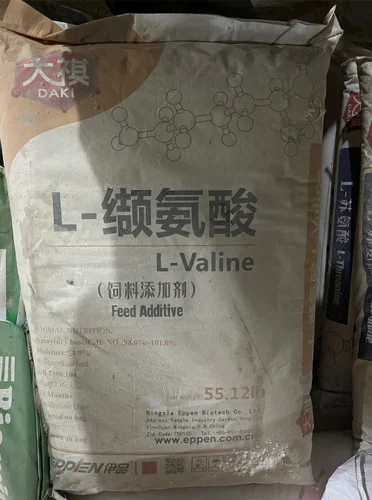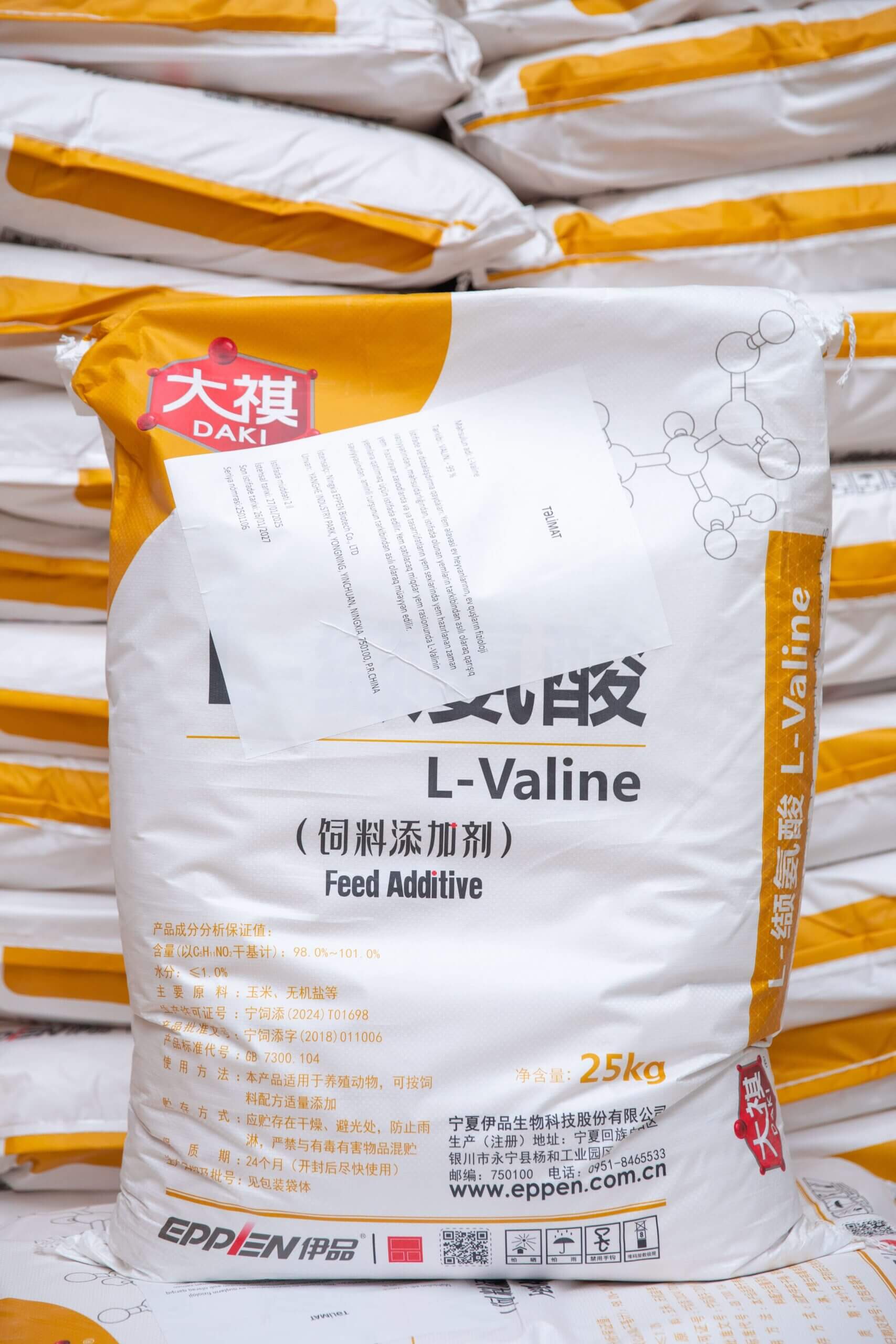
Eppen Biotech: High-Quality L-Valine for Animal Nutrition Applications
As a chemical manufacturer rooted in fermentation expertise, Eppen Biotech pursues more than making another white powder for wholesale. Every time we lift a batch of L-Valine from the fermenter, the aim sits much further than filling a drum. L-Valine sits among the essential branched-chain amino acids, much in demand by poultry, swine, and ruminant producers. The science of animal nutrition today demands more than crude protein calculations; precise inclusion of synthetic amino acids has become a tool for both economic and sustainable livestock management. Over the years, our teams have learned which details in each production run end up affecting animal performance on the farm. To us, the standards set by the feed industry have become benchmarks to surpass rather than rules to follow. As demand for meat and dairy grew worldwide, reliance on feed grains like soybean meal reached its limit. The straightforward answer could have been simply to grow more soybeans or build more processing plants, but farmland comes at a cost and so does excess nitrogen lost from imbalanced rations. L-Valine supplementation lets farmers cut down on overfeeding crude protein. That's not just a theoretical advantage — amino acid balancing reduces nitrogen excretion, supporting cleaner manure management and reducing the risk of groundwater contamination. We’ve seen firsthand that feed formulations adding synthetic L-Valine can help maintain growth rates and improve feed conversion ratios, especially in corn-based diets that often fall short of Valine. These are not just claims but data-backed observations from partners who put our product to the test on real livestock operations.Quality in chemical production grows from daily discipline in the factory, not slogans. Fermentation requires live cultures, monitored nutrient feeds, and a constant eye on fermentation kinetics. Even a small batch-deviation can result in by-products that affect downstream recovery. We test beyond what regulatory agencies ask, keeping an eye on heavy metals, metabolic by-products, and microbial contamination. L-Valine’s odour, colour, and solubility speak volumes about process control. Clear, bright, consistent batches signal everything went just right. Most end-users care about mixability and stability, but as the source, we watch for lot-to-lot consistency that ensures nutritionists aren’t fighting shifting specifications at the feed mill. Our investment in analytics, from HPLC assays to microbiological checks, stems from hard lessons — one missed parameter can mean a lost customer or, worse, a negative livestock outcome.Feed efficiency today isn’t just about cutting costs; it deals with delivering solutions that let meat and egg producers meet stricter environmental goals. Regions facing nitrate leaching or ammonia emissions pay careful attention to the nitrogen footprint of livestock operations. L-Valine and other essential amino acids allow for “precision nutrition,” where every gram of nitrogen supports protein accretion in the animal rather than turning into waste. It has become clear that missing or misformulating a single amino acid can cancel out well-intended strategies. For us, sustainability also means stewardship inside the plant: managing fermentation effluents, keeping bioreactor yields high to reduce resource inputs, and controlling energy consumption. Installing inline controls and energy-saving technologies became a priority for us long before regulators asked. Customers ask about total cost per tonne, but increasingly want to know how that tonne measures up in terms of carbon and water footprints, especially if it will contribute to “greener” pork or poultry labelling at retail.Relationships with feed manufacturers have shaped how we refine our L-Valine production. Many customers visit us to conduct their own quality audits, keen on seeing traceability down to the batch number. Trust builds when a supplier can show transparent, repeatable processes from raw materials sourcing to finished amino acid powder. Raw material traceability has come under new scrutiny as the world grows more conscious of agricultural supply chains. Fermentation inputs come from certified sources, and every batch receives internal tracking throughout the facility. We’ve invested in process controls that allow data-backed recall — not just because compliance asks for records, but because mistakes do sometimes occur and owning them promptly actually preserves more customer goodwill than hiding them. Regular feedback loops exist for reporting animal performance data back to us, so we don’t wait for major issues to emerge before addressing them. These open channels ended up saving both our clients and ourselves from costly reformulations or mistakes.Convincing feed companies to adopt higher synthetic amino acid inclusions comes with real-world barriers. Some still hold concerns rooted in outdated production processes: perceptions of unstable or contaminated product, poor solubility, or inconsistent response in animal trials. Thirty years ago, those concerns had merit, when each production lot could vary due to less-controlled fermentation and simpler purification methods. We’ve responded by pushing for better process automation and continuous sampling. Each production run brings new fine-tuning, and the process never stands still — strains are improved, media recipes optimized, and side reactions tightly monitored. Not every new trial guarantees commercial success, but steady improvements reduced both costs and the uncertainty that used to hold feed formulators back. We share detailed QC reports with key partners and demonstrate how tightening one process variable upwards can lead to better animal performance or lower waste. Years spent close to end-users mean we understand that someone else’s formulation success translates to trust in our name, not just a price advantage.Focus now turns to the interplay between nutrition science and new regulatory trends. The industry sees more pressure to limit antibiotic use and to push for healthy, rapid animal growth. That spotlight shifts expectations for every input supplier, chemical or otherwise. L-Valine applications intersect with broader advances — such as precision feeding systems, genetic selection for feed efficiency, and alternative raw material use. Demand pushes for cleaner labels, greater transparency, and a tighter loop between nutrition data and livestock health metrics. We see ourselves not just as a supplier, but as a technical partner willing to assist with feeding trials, analytical troubleshooting, and implementation of data-driven nutrition approaches. The pressure to maintain price competitiveness never lets up, but long-term viability comes from quality and close partnership, not quick fixes. Feedback from hands-on users in the field and constant review of animal performance data guide our process improvement far more than marketing slogans or global market trends.L-Valine sits at a crossroads between industrial science and farm field realities. For us, every packed shipment draws on hard-won expertise in process optimization, customer engagement, and quality assurance. Advancing animal nutrition means understanding the real struggles producers face: controlling costs, keeping livestock healthy, and complying with stricter environmental and regulatory constraints. Focusing on transparent, science-based manufacturing practices is not just about meeting demand but about building a more resilient and trusted agri-food system. Partnerships built on shared results, openness, and innovation keep moving the needle toward more sustainable, profitable, and responsible animal production.